Entertaining Ideas Without Accepting Them

I teach controversial subjects–those topics that most people are told to not discuss if you wish to be invited to holidays. In philosophy and religious studies courses we discuss the gambit of subjects that are inclined to get you uninvited to next year’s family festivities. Abortion? Yep. Politics, God’s existence, euthanasia, sex, race, drugs, and climate change? Those are discussed as well.

Of course we also discuss more *tame* subjects like the meaning of life, the nature of truth, beauty, reality, and knowledge. But even when discussing these issues, students are asked and encouraged to reflect upon their core values–those values that have been shaped by either their families or communities. So, even with these more abstract issues a student is bound to (and should) experience some level of cognitive dissonance.

The risk involved in these discussions is that a student may end up rejecting his or her own personal views, which are also the views of the community with which the student self-identifies. This can be an unnerving process and I’ve seen students have mental breakdowns, be shunned by their own families, and, yes, not invited to holidays.

A quick example is when I’ve taught environmental ethics and a student ended up becoming a vegetarian as a result of the class discussion (this is not a view that I force upon students, but just have them explore). As a result of the student’s newfound vegetarianism, the student was no longer invited to the holiday dinner–which comprised of a flesh-based meal.

I’ve observed that when students become aware of these social risks by seriously taking on the intellectual challenge of assessing  their own beliefs that they are reticent to engage the material in an honest way. I have also seen students who become frustrated that they have a tendency to shut down or even avoid class altogether. In fact, just yesterday, I had a student stop by my office to tell me she dreads coming to my class. She explained that she thoroughly enjoys my teaching and the class itself is not so bad, but that she could not bring herself to come to the class meeting. Interestingly, the topic we were discussing in class was on the meaning of life. I encouraged and invited her to come to class even though she felt that way, but she was committed to not attending.

So, what sort of management issues must I face in a philosophy or religious studies course? What I’ve found is that students are potentially triggered (to use millennial-speak) by the course content. (Students using a cellphone or laptop in my classes is no longer an issue–I can share the ways I’ve dealt with that). This is a problem for philosophy classes across the country. In fact, I’m facilitating a panel at the American Philosophical Association Eastern Division meeting on this very issue:

https://www.apaonline.org/page/TeachingHub2020CFP#facilitating

Simply because the materials I teach are potentially troublesome or triggering to students does not mean that I avoid the topics. The world is both troublesome and triggering. Classrooms are an opportunity to prepare students for the world. Therefore, we (as instructors) must assist students be prepared to navigate a troublesome world. So, I refuse to shy away from or not teach something simply because it is potentially upsetting to students.

In handling potentially triggering and contentious materials, there are a couple approaches I’ve adopted. First, I explain to them that philosophy offers tools of analysis that allows them to see different perspectives of an issue (again, critical thinking…not just using it, but teaching it).

I typically begin with Aristotle’s quote: “it is the mark of an educated person to search for the same kind of clarity in each topic to the extent that the nature of the matter accepts it…Each person judges well what they know and is thus a good critic of those things. For each thing in specific, someone must be educated; to one must be educated about everything” (Nicomachean Ethics, 1 1094a24-1095a).

The point of this quote being that students, in becoming educated persons, must become as clear as possible on a topic that they are wanting to discuss. Before they begin judging, critiquing, or assessing the topic being discussed they must first inform themselves about the topic to the best of their ability.

Now many students certainly believe that they are already in a well-informed position to determine the truth of a claim, but a quick round of Socratic inquiry reveals to students that they don’t really understand what they are discussing. For example, the question “What is the meaning of life?” seems to have a easy answer, but as soon as we dig in a little and ask “What do you mean by ‘meaning’?” Students are stuck–is it value, is it utility, is it function, is it purpose? Also, what sort of meaning is the right kind of meaning for evaluating whether or not someone does in fact live a meaningful life.

This is a helpful step to allowing students to at least be receptive to the idea that they do not know what the meaning of life happens to be. Yet, they seem to want to live meaningful lives, so how do we sufficiently answer the question?

This first step assists students to at least distance themselves from their own preconceived notions of what constitutes a meaningful life, which allows me to begin discussing the various theories on the meaning of life. By students realizing that they do not have a well-informed stance on the matter, they do not feel that their own personal views are being attacked. Instead, we get to treat the different theories as independent objects that can be dissected and evaluated.

The second step is tied to issues that may be more immediately triggering. In particular, in my medical ethics courses I discuss moral issues surrounding procreation, including abortion. This is particularly a touchy topic given the politicalization of the issue and the fact that many students may either have or know someone who has had an abortion. I do not ask students to share their own experiences and I do not even have them share their own views on abortion. Instead, I expose them to how philosophers have discussed the issue and have students assess those arguments. In particular, I include a debate held between Peter Singer and Don Marquis who take opposing positions on the issue.

The benefit of this approach is that students are able to see how we can discuss very contentious issues without having to throw chairs at one another or get emotionally heated. So, this is a good way to model the kind of discussions that students should be having when dealing with things that may lead them to become upset. Furthermore, I don’t have students discuss which person they agree with most, but, instead, I have students analyze the different arguments (using tools provided in creative thinking and logic courses). I then have students discuss the strengths and weaknesses of each argument. The benefit is that students begin reflecting on their own beliefs and assess what their own reasons may be for holding onto one position as opposed to others.

Overall, students will have to face difficult subjects. We have a responsibility to assist students cultivate the right set of tools for thinking about challenging materials without resulting in them being triggered. Sure, sometimes triggering can’t be avoided, but such is life…the world does not provide trigger warnings. By having students learn how to emotionally distance themselves from contentious topics and analyze them in a more concerted way will ensure that students are better able to think about the things that impact their own lives. Yes, this also includes thinking about the meaning of life.

Here we go again, or how it all began…

There I was, a nervous graduate student facing a crowd of four-hundred students. Their faces dimly lit by the auditorium lights as the feedback echoed during my sound check. Only 22 years old, and somehow it was expected that I was to teach Critical Thinking (during my Teaching Internship to complete my Certificate in Teaching Critical Thinking and Logic) to students not much younger than myself. I was nervous as I approached the stage and grabbed the microphone. Even in my time as a lead singer of various bands I wasn’t this nervous. Somehow the thought that I was responsible for helping these students learn how to become better thinkers struck a chord of responsibility within. So, what had I done before taking the stage to teach?

I prepared, prepared, prepared, and then I prepared even more. Every fallacy and their Latin names, Venn Diagrams, each syllogism’s Medieval form, and the major philosophers who contributed to critical thinking were studied, learned, and memorized before that first day. Some might say that I was prepared. Some might say that I was even over prepared. They were both right.

Somehow I felt the pressure to not only present the syllabus and the first week’s materials. Instead, I felt compelled to inspire an appreciation for the importance of Critical Thinking (our present higher education culture is an indicator that there is room for improvement). Yet, I thought the best way to do this was to provide a “big picture” view of the way that Critical Thinking has developed from the early days of Aristotle to the later formal developments of Frege.

And so I taught. And, boy, did I teach. There I was, pacing the stage, enthusiastically waving my arms to illustrate key points, and making (what I thought were) humorous remarks to engage the crowd. And when I was done, only 20 minutes of the class time had passed. Now, this would not be so bad if the class was meant to meet for 20 minutes. But we were supposed to meet for an 1h15m!

There I was fumbling, my teaching mentor (Greg Tropea, RIP) observing me. When I looked to him, I expected to see him shaking his head in disappointment. But worse…he was laughing. I was mortified and the students looked worse than bored. I felt that I had failed and that I was not cutout for teaching. All hopes of inspiring others to care about the nature of reality, knowledge, and values were quickly dashed. So what did I do?

As I stared at the crowd of seemingly apathetic students, I asked “Does anyone have a question?” No one raised a hand. Silence. (Thankfully this was not during the day of smart phones–otherwise, I would have been staring at a sea of glowing faces.) Then, in the back, I heard a voice.

One of the TA’s ran over to the student with the microphone. The student’s voice echoed over the PA system, asking “Can we go?” I responded, “No.”

I then asked the student, “What is the attendance policy?” The student couldn’t respond (there was no attendance policy).

I then asked “How many exams are in the class?” Students began shuffling through the syllabus to look. Then a student raised her hand to respond. After a minute for the TA to run over with the microphone, she correctly responded “Four.” Soon, the students were sifting through the syllabus and began asking questions regarding assignments and grading expectations.

Then, a student asked “What is Critical Thinking?” The other students laughed. I responded, “That’s a fantastic question. What is Critical Thinking?” The students then began to quiet themselves as I could tell they were actually trying to come up with the answer (or at least the students in the front few rows). Soon enough, a student looked to the definition of ‘Critical Thinking’ written on the syllabus and raised his hand. He responded

Critical Thinking is careful goal-directed thinking, in which students will be taught how to avoid jumping immediately to conclusions, suspending judgment no matter how strong the evidence, reasoning from an unquestioned ideological or religious perspective, and routinely using an algorithm to answer a question. In other words, it is a skill in which students learn how to think about thinking while adopting the proper patterns of reasoning. 

Stanford Encyclopedia of Philosophy entry on “Critical Thinking”

I then asked, “Why would we want to do that?”

I had the students discuss the question with each other and soon the uproar of conversation filled the auditorium. I looked to my advisor, who was no longer laughing. Instead, he simply nodded his head in acknowledgement of the successful turn of events.

The students were able to discuss where they had difficulties communicating their own ideas; how they felt duped into doing something that they didn’t want to do; and how they did not know how to properly argue.

What had started as an apparent train wreck turned out to be an insightful discussion about the details of the course, but, more importantly, the course’s significance.

It wasn’t until about the fifth year of teaching that I came across James Lang’s book On Course: A Week-By-Week Guide to Your First Semester of College Teaching. While I had certainly developed better preparation skills, including how to not over prepare, I wish I had that book during my first semester.

I hope I’ll have an opportunity during this blogging series to talk about the day I tried to teach while wearing a tie.

What Philosophers Can Learn From Welders: Experiential Learning

In 2015 Marco Rubio made an interesting statement regarding the need for more welders and fewer philosophers. Setting aside his confusion between count nouns and mass nouns, as a philosopher living in Florida during 2015, I found this to be a peculiar statement. His support for his claim that welders make more money than philosophers was false, given that those who majored in philosophy have an average mid-career pay of $85,000 per year (don’t worry, I don’t make this much). Furthermore the top ten percent of philosophy professors make more than $100,000, yet the top ten percent of welders earn around $63,000 per year.

But we really shouldn’t value jobs on the basis of their earnings. What should we value, then? That question I leave as an exercise for the reader–it may be dependent upon what we define as ‘happiness’, ‘success’, and ‘meaning’. If you want to talk about these topics, please stop by my office (Building 3 Room 234). I have coffee!

Thankfully, Rubio recognized that both philosophers and welders contribute to society and the world. Interestingly, it was the Stoics who helped change his mind. Go figure!

People who have studied philosophy have shaped every industry we value. Please, if you click on any link, please click on that one. You’ll see examples of people who have studied philosophy who have gone onto careers in government and politics, activism, academia, business (really), religion, writing, news and journalism, arts and entertainment, and (even) sports. Take note, they’re not just dead white guys.

Often times, my time is spent sharing what we can learn from philosophers–how their tools of analysis can help us discover our assumptions and how they have provided us frameworks for making sense of democracy, mathematics, economics, art, business, aviation, medicine, physics, biology, and chemistry. Really! All of these fields originated with philosophers asking questions about the nature of the world, health, us, society, and the environment. There is a reason why a ‘Ph.D.’ is a doctor of philosophy…In particular, a Ph.D. requires the candidate having made a novel contribution to his or her field. (I ‘m happy to discuss what was involved in earning a Ph.D. in Philosophy.)

But philosophy has a bad PR problem. We’re annoying, abstract, idealistic…just look to history and you can see that many philosophers were either asked to kill themselves, go into exile, or enslaved. Granted—many philosophers have ended up killing themselves,  due to the belief that autonomous humans have the right to choose when and how to die.

It’s little wonder as to why contemporary culture has not been receptive to what philosophers had to offer.

One of my favorite examples of philosophy being on the defense (and the Liberal Arts more generally) is found in Seneca’s 88th Letter to his nephew Lucilius, in which he writes:

You have been wishing to know my views with regard to liberal studies.[1] My answer is this: I respect no study, and deem no study good, which results in money-making. Such studies are profit-bringing occupations, useful only in so far as they give the mind a preparation and do not engage it permanently. One should linger upon them only so long as the mind can occupy itself with nothing greater; they are our apprenticeship, not our real work. 2. Hence you see why “liberal studies” are so called; it is because they are studies worthy of a free-born gentleman. But there is only one really liberal study, – that which gives a man his liberty. It is the study of wisdom, and that is lofty, brave, and great-souled. All other studies are puny and puerile. You surely do not believe that there is good in any of the subjects whose teachers are, as you see, men of the most ignoble and base stamp? We ought not to be learning such things; we should have done with learning them.

Certain persons have made up their minds that the point at issue with regard to the liberal studies is whether they make men good; but they do not even profess or aim at a knowledge of this particular subject. 3. The scholar busies himself with investigations into language, and if it be his desire to go farther afield, he works on history, or, if he would extend his range to the farthest limits, on poetry. But which of these paves the way to virtue? Pronouncing syllables, investigating words, memorizing plays, or making rules for the scansion of poetry, what is there in all this that rids one of fear, roots out desire, or bridles the passions? 4. The question is: do such men teach virtue, or not? If they do not teach it, then neither do they transmit it. If they do teach it, they are philosophers. Would you like to know how it happens that they have not taken the chair for the purpose of teaching virtue? See how unlike their subjects are; and yet their subjects would resemble each other if they taught the same thing.

Seneca was the consultant to Nero, a playwright, and an investment banker (in fact, he was one of the wealthiest Romans). This was written around 64-65 CE! Not much has changed in terms of our need as philosophers and proponents of the liberal arts (i.e., humanities).

The point is that we have never been very good at living (I’d say we’ve gotten worse at living) and philosophy provides us with tools for assessing the lives that we live so that we have some better chance of getting on the right track.

Even though Rubio changed his mind about the benefit of having philosophers among the public citizenry, it is not anytime soon that the general public will understand what benefits and joys philosophy can provide.

So everything above has been about what philosophy may have to offer. But I deeply respect and appreciate anyone capable of working with metal. I’ve worked in areas of the country where mining and fracking were the main sources of occupation–I have a deep appreciation for their work ethic and dedication, but am I envious of those lives…I’m sorry to report, but no. The depression, sickness, and addiction I observed in these environments indicates that there is more to life than stripping the earth of resources to which we’re addicted.

Yet, I believe that we can still learn from welders…in particular we can learn from welders how they learn. In particular, vocational training incorporates a method of learning understood in pedagogical circles as experiential learning. There’s a society, association, and institute dedicated to this practice.

In general, experiential learning is thought as “learning by doing.” But it’s more than that. Unsurprisingly, philosophers have made contributions to education as well–and experiential learning is no exception. First, Aristotle was very concerned with how we cultivate intellectual virtues (around 350 BCE). Second, Dewey (around  was responsible for most of our modern developments of the educational system, including experiential learning in his book Experience and Education (1938). These approaches have helped inform Kolb’s model of experiential learning, which includes the following steps:

  1. Concrete experience (including doing an activity or having an experience)
  2. Reflective Observation (reviewing / reflecting on the experience)
  3. Abstract Conceptualization (Concluding / Learning from the experience)
  4. Active Experimentation (Planning / trying out what you learned)
  5. Repeat

Image result for kolb model

So, in the case of welding, you have a concrete experience of working with oxy-aceylene equipment, using a torch tip in a back and forth patter to make a small molten area on each side of a joint (thank you Google). You see which patterns of moving the torch generate the desired result to then realize that a “U” shape is more effective than an “O” shape or “T” shape. You then try that knowledge out in different contexts to develop a general understanding of how to move a torch so that you can then refine your skill in more advanced sequences.

This is something I’ve used in philosophy courses. Most notably, in my logic course I teach students how to assess deductive arguments for validity. First, they’re introduced to the tools of logic, including propositions, premises, conclusions, unary and binary operators, T-tables, in addition to a general syntax for generating well-formed formulas and a semantics to determine truth-values of complex statements. Second, they’re tasked with translating ordinary language statements (i.e., English) into the formal language of PL (propositional logic). They learn which operators can adequately capture the meaning of words such as ‘both’, ‘and’, ‘not’, ‘when’, ‘if’, ‘either’, and so on. They also recognize the meanings of which words are not easily captured by the formal language (e.g., ‘bald’).

Logic is a nice example in which philosophy students are able to have the concrete example of seeing how the formal language relates to the ordinary language. They can reflect on the experience of translating ordinary language statements into the formal language. They can then recognize patterns to determine how to properly apply operators in future instances, which allows them to make accurate assessments about validity in more complex cases.

But logic is an easy example since it is more obviously a skill-based subject akin to mathematics (in fact, thinkers such as Russell, Whitehead, Frege, Marcus, and Winters argue that logic is the foundation of mathematics). What about more content-based areas in philosophy?

Interestingly, at least I think interestingly, I’m in the process of editing a special issue of the American Association of Philosophy Teachers’ journal Studies in Pedagogy that is focused on experiential learning and education. (Can’t believe I’ve been working on this for over a year now–it’s almost done!) In this special issue, researchers from education, psychology, and philosophy have been contributing to the discussion about how to develop experiential techniques in content-based philosophy courses (including Critical Thinking, Environmental Ethics,  Introduction to Philosophy, and Philosophy of Science). Such techniques include using knowledge from other fields, including physics, biology, ecology, game theory, and psychology.

What have I learned from editing this volume? In response to Rubio, I’m glad that he learned something about the contributions that philosophy has made, but we should also recognize that we can learn from the vocational fields. In particular, they engage their students, get them to care about their fields, and make meaningful connections inside and outside the classroom. These are the very things we want philosophy and humanities students to learn as well. We want them to engage the material. We want them to care about the material. Last, and most importantly, we want them to take the skills they learn in the humanities to their everyday lives. In particular, if I can end with a wish, may they learn how to become happier, more virtuous, caring, empathetic, literate, communicative, sensitive, and, yes, even wiser.

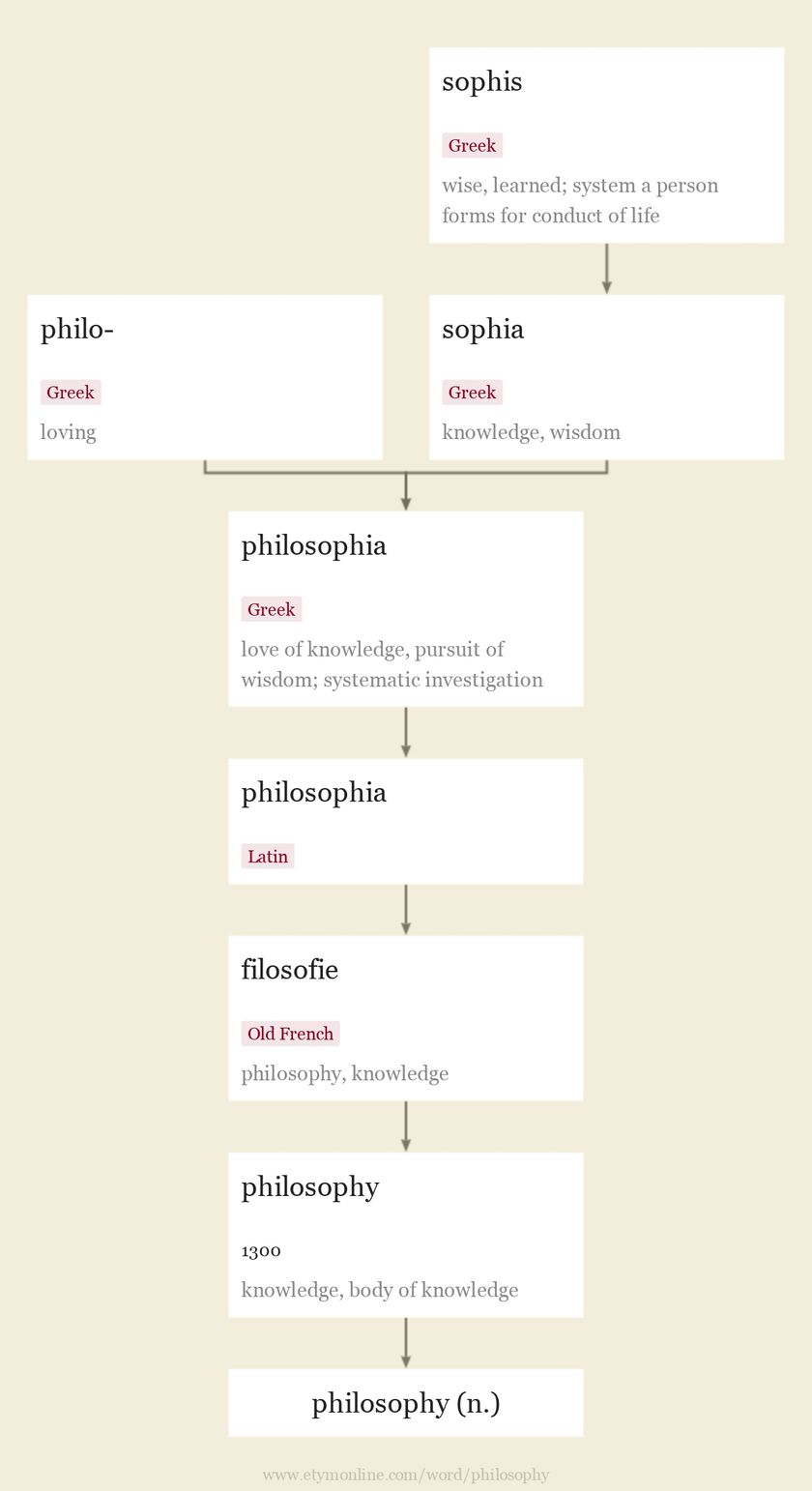
Origin and meaning of philosophy

This blog post has been written by Andrew M. Winters.

Living Like a Stoic

For the past 6 years I’ve been engaging in the project of Living Like a Stoic for a Week. This is an international event. Why would anyone want to do that? I’ve already answered that question here.

For the past 5 years, I’ve been doing this project with other students to help them better understand the extent to which the Greco-Roman Philosophers provide us with tools for thinking about how to live well. More shameless self-promotion.

So, this year I decided to try my hand at Living Like a Stoic with students at Yavapai College. In large part, since I was already going to be taking on this activity by myself, I figured I could learn along with students. And that’s exactly what this activity is, it’s an opportunity to learn with students. My journey through philosophy, having been in college for over 15 years, has exposed me to many theories regarding the good life and what it means to flourish (that eudaimonia I mentioned in my last post), yet, I recognize that each of us has much to learn while we’re still alive. In many ways, we will never be perfect at living life, so why not continue to take on activities that will help us get a little better at it?

There seems to be a theme in my posts. While my last post dealt with the common sacrifices that both teachers and students have made, this one deals with our shared interest / concern with learning how to live well. That is the reason students come to college, right? They want to learn how to become better nurses, teachers, entrepreneurs, designers, artists, and…maybe even humans?

The Live Like a Stoic for a Week event has a different theme each year, ranging from love, emotions, professional lives, and the Meditations of Marcus Aurelius. This year’s theme was on happiness. But not happiness as that momentary feeling that comes and goes. Instead, Stoic happiness is what is obtained when one lives a virtuous life–a life that has those characteristics (e.g., courage) that aids someone in his or her capacity to fulfill his or her potential. The bummer is that according to the Stoics we can’t tell if we are happy. Only a virtuous person is capable of judging if we have flourished–and this can only be done once we are no longer living.

So, what’s the point? In some ways, to adopt Kant’s language, the Stoic conception of happiness serves as a regulative ideal. It is an ideal we have in place, asking ourselves “what would a virtuous life be like?” While we cannot really know what that life is, we can strive to obtain such a life. In doing so, we end up becoming better humans–more compassionate, caring, charitable, courageous, and, yes, even more happy.

What was involved? There were multiple events, including three evening lectures by YC faculty dealing with history, philosophy, psychology, and art. The highlight, however, was the morning meditation sessions that took place at 6am Monday through Friday. Why so early? Well, first off, what else are you going to do at that time? Sleep? 🙂 Second, the opportunity to wake with the stars allows you to wake with the sole purpose of improving yourself. You’re not waking to go to your job or the gym, you’re waking to focus on how you can live a better life. Third, it’s truly rewarding to begin the session when it is dark and finish with the rising sun.

So, I invite you to next year’s Live Like a Stoic for a Week, where we can learn from each other how to be better humans, while using the tools that have been provided for us since 300 BCE.

BTW…this is Andrew Winters. I was told to provide my name.

Remembering Mimir: Learning and Sacrifice

I’m new to Yavapai College…brand new. This is my first semester teaching here, and so far it’s been amazing. I’m not just saying that because of the offhand chance that some member of my hiring committee may also be viewing this post. It really has been amazing and invigorating. Thank you to everyone I’ve met for providing such a welcoming community. It is inspiring to work alongside such passionate pedagogues.

It has not been an easy path to get here. The story, however, would warrant more than sixteen sentences and at least three cups of coffee.  What is important, though, is that I want to be here. I do not have to be here. Yet, I’ve made many sacrifices to get here.

Although these sacrifices have not been as exorbitant as Odin’s own sacrifice to Mimir, in his removal of one eye to obtain knowledge, they have been lessons unto themselves. And I trust that I am not the only one who has made a sacrifice to be here.

What can we learn from having made these sacrifices? For myself, I have learned that everyone’s path is different, a unique journey. In having made the journey, each of us demonstrates a commitment to this profession–a Janus-faced field in which we must constantly be both the participant in and the facilitator of learning.

But because each of us has traversed a different space to get here, we have different stories to share. Unfortunately, we can only share in the retelling of such stories and not the first-hand experiences that informed those stories in the first place. This inability to access each other’s experiences is a key feature of Merleau-Ponty’s The Visible and Invisible (see the section on “Reflection and Interrogation”).

How does this relate to teaching? In the sharing of our stories, including our sacrifices, we build a community in which we are better able to present and relate to the world (here, I mean something akin to Uexküll’s Umwelt). Yet, this is what the primary facilitators of the learning space can contribute to each others’ understanding.

More importantly, however, is our recognition that our students have also made a decision to be here. They do not have to be here. And many of them have made sacrifices to be here. Some of their sacrifices have been as exorbitant as Odin’s. And yet, they are here.

Hearing their stories has been humbling. I can only express gratitude to them for entrusting me with their tales. They inspire me to be both a more open and attentive teacher / human.

I can only hope that they will be better off for having spent time in our classrooms, both academically and in their capacities to flourish as humans (to exhibit eudaimonia). I know that I am better off for having them in my classroom–even in the short time I’ve been here.